
How to Become a Tattoo Artist
There's no certificate that makes you a tattoo artist — only the work, the apprenticeship, and the years. Here's the honest, no-shortcuts path from "I want to tattoo" to working artist.

So you want to become a tattoo artist. Good. It's one of the few trades left where skill, taste, and grit still beat credentials — but the path is longer and less glamorous than Instagram makes it look. There is no certificate that makes you a tattoo artist. There is only the work, the apprenticeship, and the years.
Here is the honest version of how it actually happens.
Step 1: Get good at drawing first
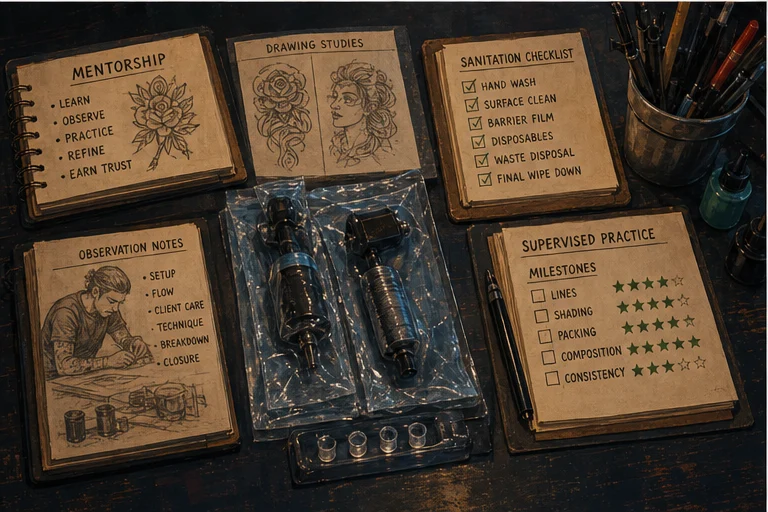
Before anyone lets you near a machine, you need to prove you can draw. Not "doodle in a notebook" draw — develop a real body of work. Strong line confidence, clean shading, an understanding of composition and how design sits on a curved surface.
This is the filter. Most people who say they want to tattoo never build a portfolio, and that's exactly why shops ask for one. Draw every day. Fill sketchbooks. Redraw classic tattoo flash to understand why it has lasted — bold lines, readable from across a room, built to age well on skin.
Step 2: Build a portfolio that gets you in the door
Your portfolio is your application. A mentor is deciding whether you're worth years of their time, so make it easy to say yes:
- 30–50 of your strongest pieces, not 200 mediocre ones
- A range that shows fundamentals: linework, black-and-grey shading, color, lettering
- Tattoo-aware designs — things that would actually work as tattoos, not just nice illustrations
- Clean presentation. A tidy book signals you'll be tidy at a station.
If you want a deeper breakdown of what a professional setup looks like once you're working, our year-one survival guide for tattoo artists covers the business side most people learn too late.
Step 3: Land an apprenticeship
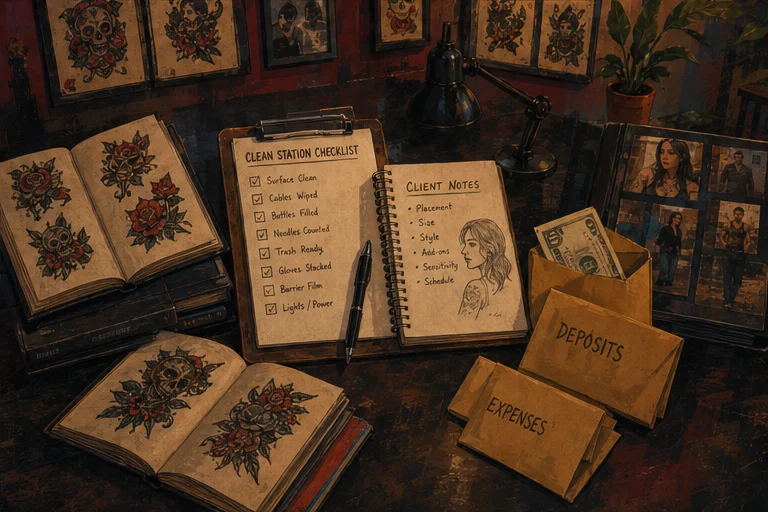
The apprenticeship is still the real way in. A structured apprenticeship under a skilled working artist gives you what no school can: real clients, real pressure, and real feedback on real skin. It also teaches the unglamorous fundamentals — setup, teardown, cross-contamination prevention, how to talk to a nervous client.
Finding one takes humility and persistence. Walk into shops with your book. Be respectful of their time. Expect to start by cleaning, drawing, and watching long before you tattoo. And be careful: a bad apprenticeship under a careless artist can teach habits that take years to unlearn. We wrote a full breakdown of what to look for in a tattoo apprenticeship — read it before you commit to anyone.
Can you skip the apprenticeship? In some places, legally yes. But self-taught artists almost always have gaps in safety, technique, and professionalism that show up in the work and the chair. The apprenticeship exists for a reason.
Step 4: Get licensed and bloodborne-pathogens certified
Tattooing is regulated, and the rules vary by state, county, and country. Almost everywhere, you'll need:
- Bloodborne pathogens (BBP) training — usually OSHA-aligned, often renewed annually
- A tattoo license or permit for you and the shop
- Compliance with local health-department standards for sterilization and sanitation
This isn't optional or a formality — it's what separates a professional from a liability. Check your local health department's exact requirements early, because some apprenticeships won't let you tattoo clients until your paperwork is in order.
Step 5: Start tattooing — supervised, then solo
Once your mentor says you're ready, you start tattooing for real: practice skin first, then supervised work on willing clients, then your own appointments. Your early tattoos will be slower and humbler than your drawings. That's normal. Speed and confidence come from reps.
This is also where you start building the thing that actually sustains a career: a client base and a reputation. Clean work, reliable communication, and showing up on time matter as much as raw talent.
Step 6: Go professional — treat it like a business
The day you start booking your own clients, you stop being just an artist and start running a small business. This is where most new artists struggle, because nobody apprentices them in operations.
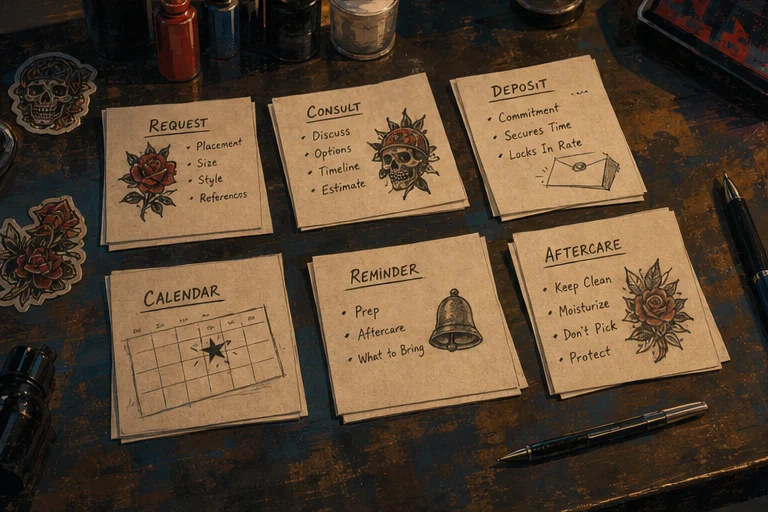
You'll need to handle bookings, deposits, reminders, intake forms, and your own brand. Doing that through Instagram DMs and a paper calendar is how new artists lose money and burn out. A booking page with deposits and automated reminders protects your time from day one — that's exactly the problem LVL2 was built to solve, by a working tattoo artist. When you're ready, see what's included.
How long does it take to become a tattoo artist?
There's no fixed timeline, but a realistic one looks like this:
- 6–18 months building a portfolio strong enough to land an apprenticeship
- 1–3 years apprenticing, depending on the mentor and how fast you progress
- Several more years developing speed, style, and a steady client base
Plan in years, not months. The artists you admire put in a decade before it looked effortless.
Frequently asked questions
Do you need a degree to become a tattoo artist? No. There is no degree or formal education requirement. What you need is a strong portfolio, an apprenticeship, and the licenses your local health department requires.
How much does it cost to become a tattoo artist? It varies. Traditional apprenticeships are often unpaid (and sometimes you pay the mentor), so budget for living expenses during training plus supplies, BBP certification, and licensing fees. Curious what the payoff looks like? See how much tattoo artists actually make.
Can you become a tattoo artist without an apprenticeship? In some regions it's legal to self-teach, but it's the hard road. Most successful artists apprenticed, and shops strongly prefer apprenticed artists because of the safety and technique training involved.
What's the hardest part of becoming a tattoo artist? For most people it's two things: building a portfolio good enough to get taken seriously, and surviving the lean early years financially while you build a client base.
The bottom line
Becoming a tattoo artist is simple to describe and hard to do: get good at drawing, build a portfolio, earn an apprenticeship, get licensed, and put in the reps. There's no shortcut and no certificate — just the work.
When you reach the point of booking your own clients, the business side becomes its own craft. Set it up properly from the start so your calendar, deposits, and reminders run themselves and you can focus on the art. That's what LVL2 is for.
Set up the business side from day one
When you start booking your own clients, LVL2 handles your booking page, deposits, reminders, and intake so you can focus on the art.
Try LVL2 Free